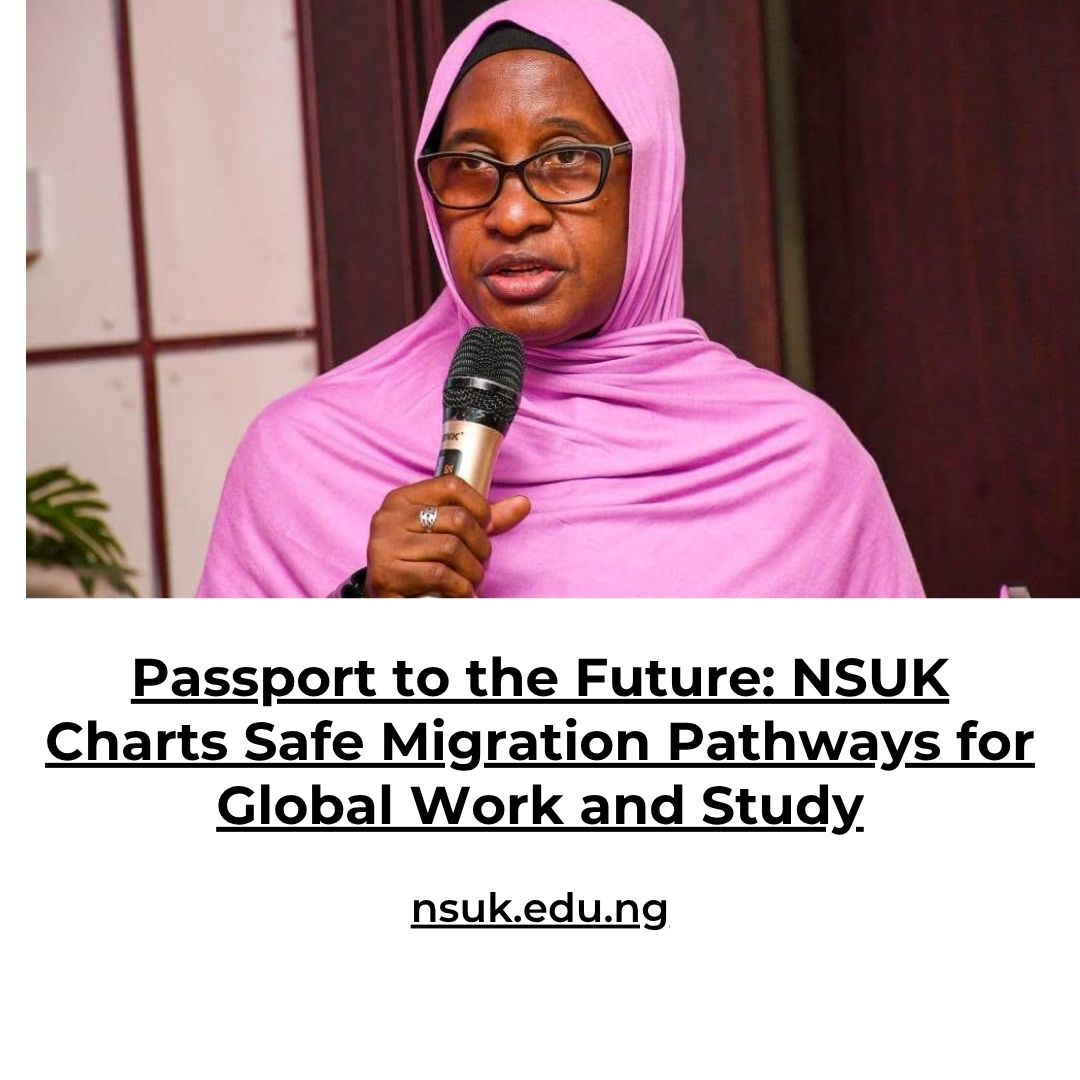
ADDRESS BY PROFESSOR SA’ADATU HASSAN LIMAN
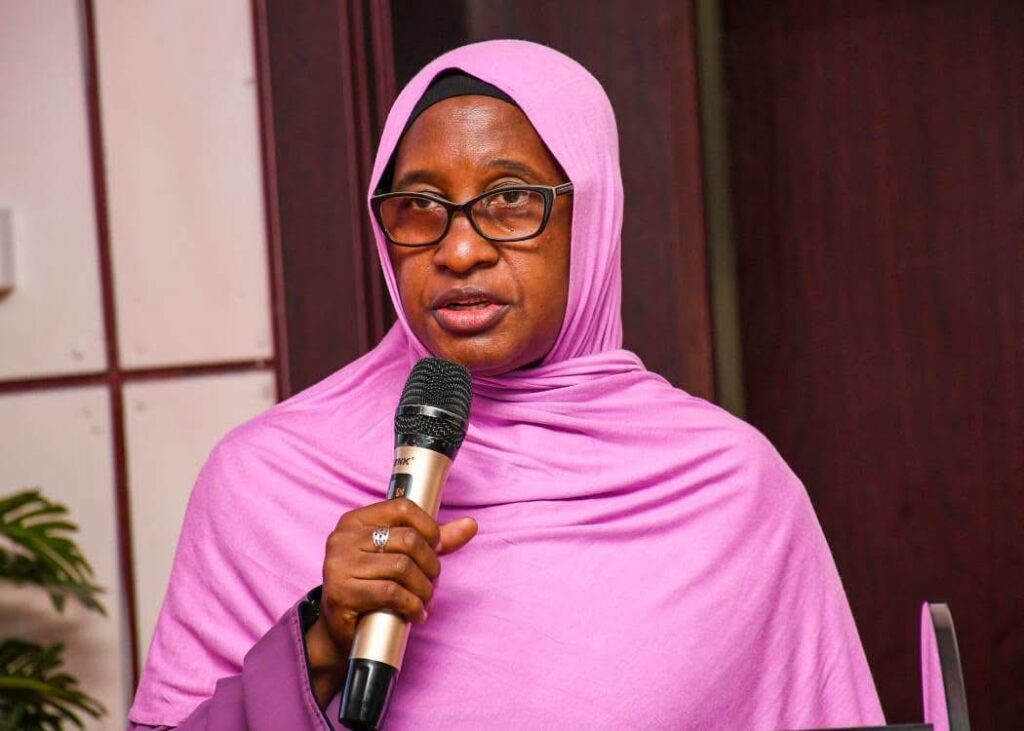
VICE-CHANCELLOR, NASARAWA STATE UNIVERSITY, KEFFI
AT THE STRATEGIC STAKEHOLDER ENGAGEMENT MEETING ON THE NSUK HOLISTIC GRADUATE DEVELOPMENT INITIATIVE (HGDI)
“ONE DEGREE – ONE TRADE – ONE ENTERPRISE”
It gives me immense pleasure to welcome you to Nasarawa State University, Keffi, for this historic engagement on what I consider one of the most transformative initiatives in the evolution of higher education in Nigeria, the NSUK Holistic Graduate Development Initiative (HGDI), anchored on the philosophy of “One Degree – One Trade – One Enterprise.”
Today is not merely about launching a programme. It is about launching a new vision of university education. It is about redefining what it means to graduate from a Nigerian university in the twenty-first century.
When I assumed office as Vice-Chancellor, I articulated a vision built on innovation, integrity, excellence, inclusivity, digital transformation, entrepreneurship, global competitiveness, and community impact. I firmly believed that universities must move beyond the traditional mandate of teaching, research, and community service to become catalysts for economic transformation and engines of human capital development.
Our responsibility is not simply to produce graduates; it is to produce graduates who can solve problems, create jobs, generate wealth, adapt to emerging technologies, and contribute meaningfully to society.
Over the past two and a half years, we have pursued this vision with determination and purpose.
We have strengthened academic quality assurance and curriculum relevance. We have expanded international partnerships through Erasmus+, collaborations with institutions across Europe, Africa, and beyond, and strategic engagements with research and innovation centres. We have deepened digital transformation through investments in ICT infrastructure, digital literacy programmes, smart learning environments, and technology-driven administration.
We have also invested significantly in infrastructure and student development. Across our campuses, new roads, academic facilities, research hubs, hostels, and innovation spaces have emerged. The commissioning of the UNDP-supported MineTech UniPod, one of the most advanced innovation facilities in our region, demonstrates our commitment to translating knowledge into practical solutions and economic opportunities.
Our Entrepreneurship Development Centre has been repositioned to become a hub for enterprise creation, innovation, and skills development. Through partnerships with government agencies, technology firms, and development partners, we have expanded opportunities for our students to acquire practical competencies beyond the classroom.
These achievements are important. Yet, they are only stepping stones towards a larger goal.
The truth is that the world of work is changing rapidly. Artificial intelligence, automation, digitalisation, climate change, demographic shifts, and evolving business models are reshaping economies globally. The graduates of today are competing not only within Nigeria but within a global marketplace.
Employers increasingly seek individuals who possess practical competencies, problem-solving abilities, entrepreneurial mindsets, digital skills, adaptability, and professional certifications alongside academic qualifications.
Unfortunately, many graduates continue to face difficulties because education systems have not evolved at the same pace as labour market demands.
This is the challenge that HGDI seeks to address.
The Holistic Graduate Development Initiative represents our institutional response to one of the most pressing national challenges, graduate unemployment and underemployment.
Under this model, every NSUK student will graduate with three critical assets:
First, an academic degree that demonstrates intellectual competence.
Second, a nationally recognised trade, vocational, digital, or professional certification that validates practical capability.
Third, enterprise development competencies that equip graduates to create opportunities rather than merely seek opportunities.
In essence, we seek to produce graduates who are employable, entrepreneurial, innovative, digitally empowered, and globally competitive.
The initiative is deliberately designed to align with national and international frameworks. It supports the National Skills Qualification Framework, the NUC Core Curriculum and Minimum Academic Standards, youth empowerment policies, digital economy strategies, and the Sustainable Development Goals.
Through structured progression from the first year to graduation, students will move from opportunity discovery and skills orientation to competency development, enterprise creation, certification, and business formalisation.
They will have opportunities to participate in digital skills programmes, agribusiness ventures, renewable energy technologies, manufacturing, creative industries, construction trades, and emerging sectors that will define the future economy.
However, ladies and gentlemen, the University cannot achieve this vision alone.
Universities do not create employable graduates in isolation.
Industry must define the skills required.
Regulators must provide standards and certification pathways.
Development partners must support innovation and scaling.
Financial institutions must provide access to capital.
Professional bodies must provide mentorship and quality assurance.
Technology companies must facilitate access to emerging competencies.
This is why your presence here today is so important.
We are not inviting stakeholders to support another university project.
We are inviting you to become co-creators of a national model that can redefine graduate development in Nigeria and potentially across Africa.
We seek your partnership in establishing certification pathways.
We seek your support in creating apprenticeship and internship opportunities.
We seek your expertise in curriculum enrichment and industry mentorship.
We seek your assistance in establishing skills hubs, innovation labs, incubation centres, and startup financing mechanisms.
We seek your commitment to helping young Nigerians transition successfully from classrooms to careers, enterprises, and leadership.
Our ambition is bold.
We aspire to position NSUK as Nigeria’s leading model for integrated graduate development.
We aspire to produce graduates who leave the University not only with knowledge but with competence.
Not only with ambition but with capability.
Not only with certificates but with opportunities.
Not only with dreams but with the tools to realise those dreams.
The history of great institutions is defined by their willingness to innovate and respond to societal needs.
Today, we stand at such a moment.
The decisions we make, the partnerships we forge, and the commitments we secure will shape the futures of thousands of young people who pass through our classrooms.
I therefore call upon all stakeholders represented here to join us in building a future where every graduate is empowered to contribute productively to society, create value, and drive economic transformation.
Together, let us create a new paradigm of university education.
Together, let us bridge the gap between education and employment.
Together, let us build graduates who are creators, innovators, entrepreneurs, and leaders.
Together, let us build the future.
Thank you, and God bless Nasarawa State University, Keffi.
God bless Nasarawa State.
And God bless the Federal Republic of Nigeria.
Thank you.